
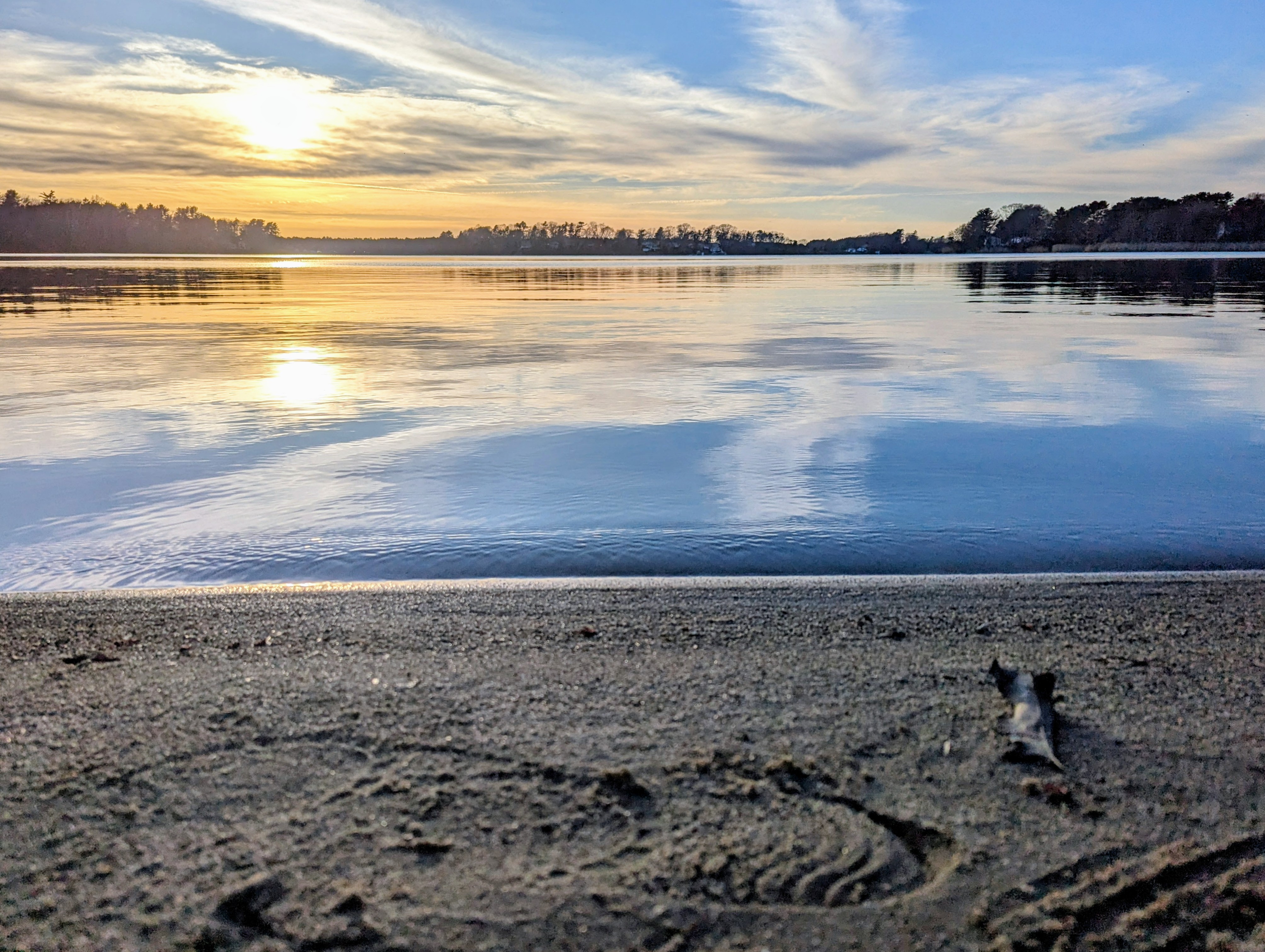
Local Species
The waters of southeastern Massachusetts hold a solid mix of warmwater panfish, bass, pickerel, and the occasional stocked trout. Bag limits and size minimums below reflect current Massachusetts statewide general regulations — some individual waters may have special rules. Always check mass.gov/masswildlife and the current year's freshwater fishing regulations before you head out.
Largemouth Bass
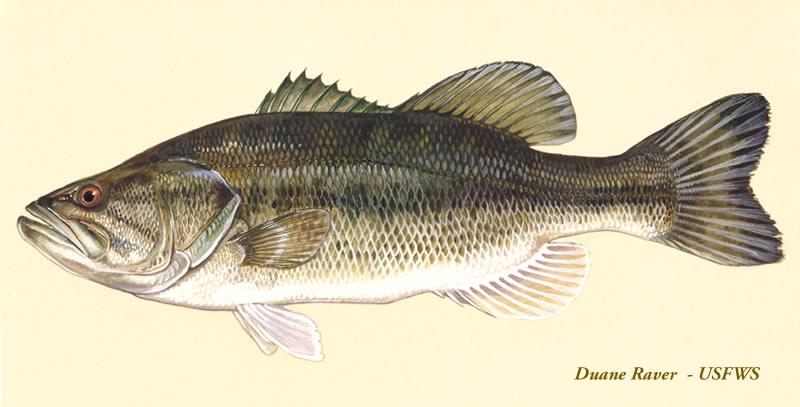
| Common Name | Largemouth Bass |
|---|---|
| Scientific Name | Micropterus salmoides |
| Baits & Lures | Soft plastic worms, topwater plugs, spinnerbaits, jigs |
| Local Waters | Burrage Pond, Cleveland Pond, East Monponsett Pond, Furnace Pond, Long Pond (Plymouth), Robbins Pond, Sampsons Pond, Silver Lake, Stetson Pond, West Monponsett Pond |
| Best Season | Late spring through fall (May–October); peak in June–July |
| Typical Local Size | 10–16 inches; occasional fish over 18 inches in larger, older waters |
| Bag/Size Limit | 5 fish per day, 12-inch minimum length — verify current regs |
Fishing Tips: Cast along weed edges and the outside of lily pads. Early morning is best. Once the water warms up in summer, largemouth go deep and slow down. Slow your retrieve to match. There's a 12-inch minimum, so carry something to measure with. Catch-and-release is always an option.
Smallmouth Bass
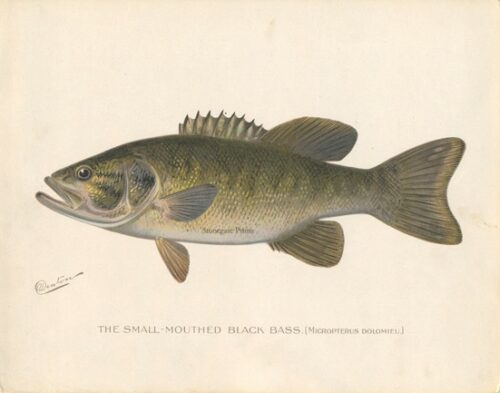
| Common Name | Smallmouth Bass |
|---|---|
| Scientific Name | Micropterus dolomieu |
| Baits & Lures | Tube jigs, crayfish imitations, small spinners, drop-shot rigs |
| Local Waters | Long Pond (Plymouth), Silver Lake |
| Best Season | Spring (pre-spawn) and fall as water cools; less productive in warm summer months |
| Typical Local Size | 10–14 inches; larger fish possible in Silver Lake and Long Pond |
| Bag/Size Limit | 5 fish per day, 12-inch minimum length (same as largemouth) — verify current regs |
Fishing Tips: Smallmouth want cleaner water than largemouth. Look for rocky points, gravel, and drop-offs instead of weeds. They're most aggressive in spring and fall. Tube jigs and crayfish imitations near the bottom are the standard approach. If you're finding largemouth in the weeds and want to target smallmouth, move toward firmer bottom structure.
Chain Pickerel
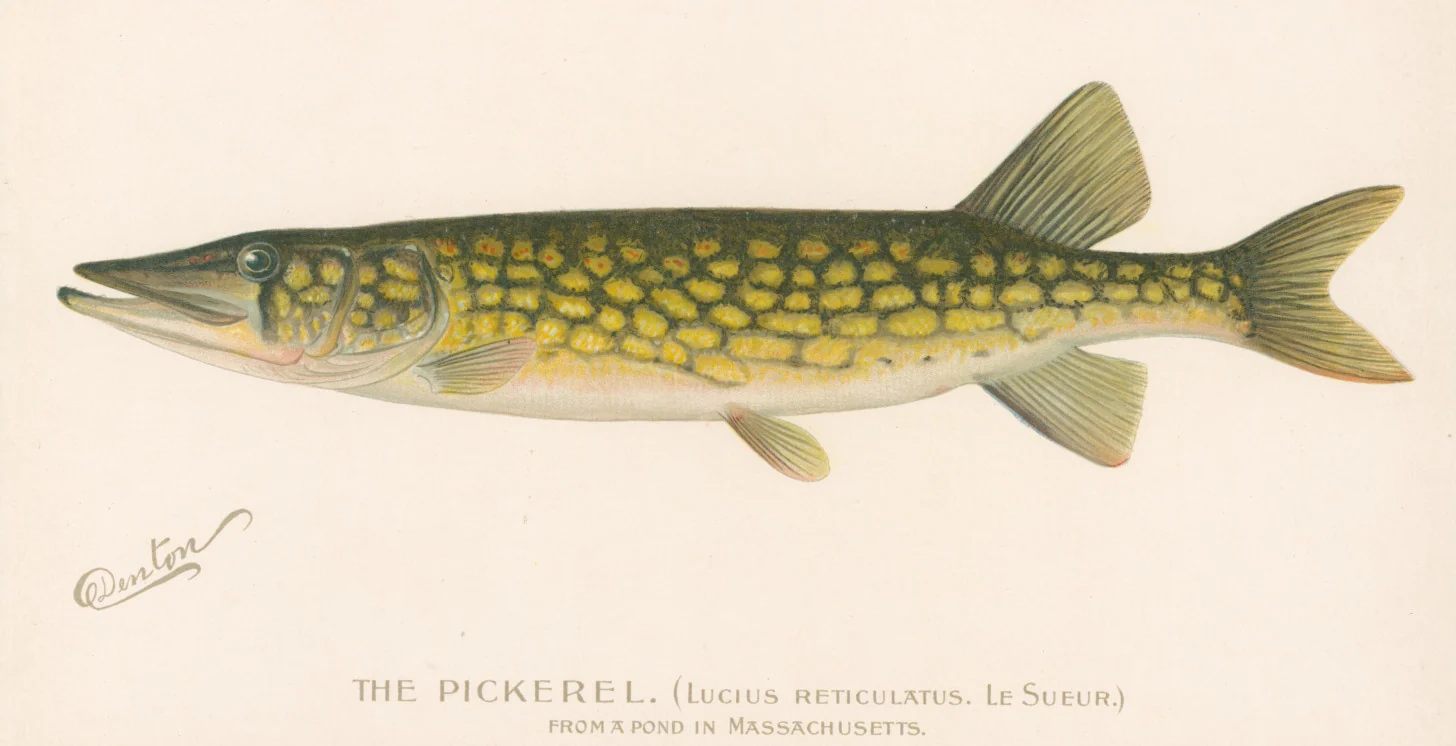
| Common Name | Chain Pickerel |
|---|---|
| Scientific Name | Esox niger |
| Baits & Lures | Spinnerbaits, swimbaits, inline spinners, live baitfish |
| Local Waters | Burrage Pond, Cleveland Pond, East Monponsett Pond, Furnace Pond, Robbins Pond, Sampsons Pond, Silver Lake, Stetson Pond, West Monponsett Pond |
| Best Season | Year-round; especially aggressive in early spring and late fall |
| Typical Local Size | 12–20 inches; occasional fish to 24 inches or larger |
| Bag/Size Limit | 5 fish per day, no minimum size — verify current regs |
Fishing Tips: Pickerel sit in weeds and wait. Cast spinnerbaits or swimbaits along weed edges and keep the retrieve moving. Their teeth will cut standard mono, so add a short wire leader or tie on heavier fluorocarbon ahead of your lure. Weedless soft plastics work well in thick vegetation. Small pickerel are aggressive and plentiful. Good fish for beginners.
Yellow Perch
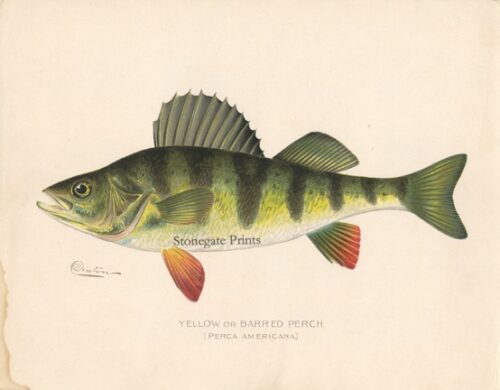
| Common Name | Yellow Perch |
|---|---|
| Scientific Name | Perca flavescens |
| Baits & Lures | Nightcrawlers, small jigs, inline spinners, small minnows |
| Local Waters | Burrage Pond, Cleveland Pond, East Monponsett Pond, Furnace Pond, Long Pond (Plymouth), Robbins Pond, Sampsons Pond, Silver Lake, Stetson Pond, West Monponsett Pond |
| Best Season | Spring spawning run (March–April) and fall; active year-round including winter |
| Typical Local Size | 6–9 inches; occasional fish to 11 inches |
| Bag/Size Limit | 25 fish per day, no minimum size — verify current regs |
Fishing Tips: If you catch one yellow perch, stay put. They school tight, and there are usually more nearby. A small jig or nightcrawler at 4 to 8 feet is all you need. If the bites stop, try a different depth before you move. One of the easier fish to catch and one of the better ones to eat.
White Perch
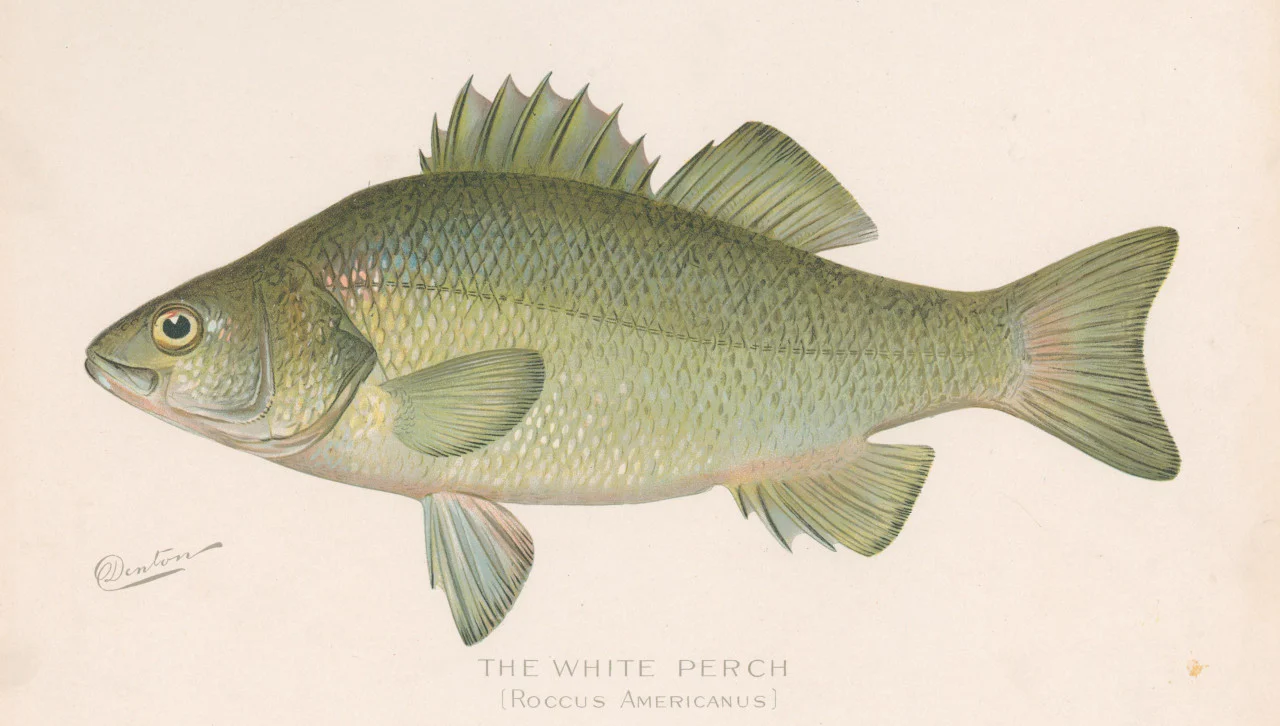
| Common Name | White Perch |
|---|---|
| Scientific Name | Morone americana |
| Baits & Lures | Small spinners, nightcrawlers, small jigs, shiner minnows |
| Local Waters | Burrage Pond, East Monponsett Pond, Furnace Pond, Long Pond (Plymouth), Robbins Pond, Sampsons Pond, Silver Lake, Stetson Pond, West Monponsett Pond |
| Best Season | Spring spawning run (April–May) and fall; consistent through summer |
| Typical Local Size | 7–10 inches; larger fish in Silver Lake and Long Pond |
| Bag/Size Limit | 25 fish per day, no minimum size — verify current regs |
Fishing Tips: White perch take the same tackle as yellow perch. The difference is they run a bit larger and hold higher in the water column. Try mid-depth before going all the way to the bottom. Spring is when they're most active, stacked in shallow water and willing to bite. Good eating, firm white flesh.
Black Crappie
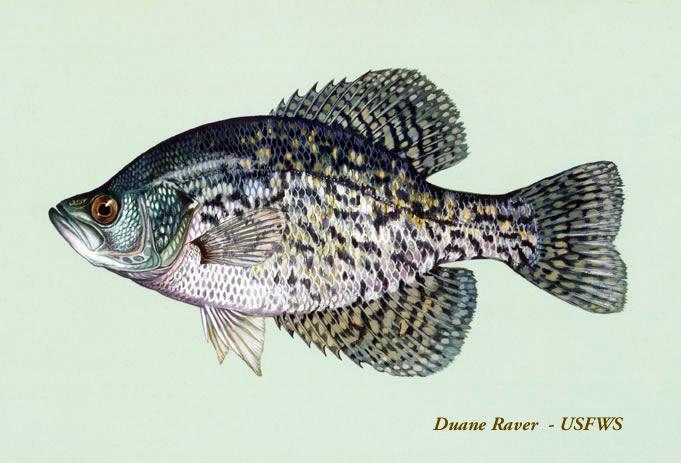
| Common Name | Black Crappie |
|---|---|
| Scientific Name | Pomoxis nigromaculatus |
| Baits & Lures | Small jigs (1/32–1/16 oz), live minnows, small spinners |
| Local Waters | Burrage Pond, Cleveland Pond, East Monponsett Pond, Furnace Pond, Robbins Pond, West Monponsett Pond |
| Best Season | Spring spawning period (May–June) and early summer |
| Typical Local Size | 7–10 inches |
| Bag/Size Limit | No statewide bag or size limit — verify current regs |
Fishing Tips: Crappie suspend in the water column, not near the bottom. If you're not getting bites, adjust your depth a foot or two at a time until you find the school. A small jig under a slip-float is the standard setup. Live minnows work too. Once you find them, they bite readily. Good table fare.
Bluegill
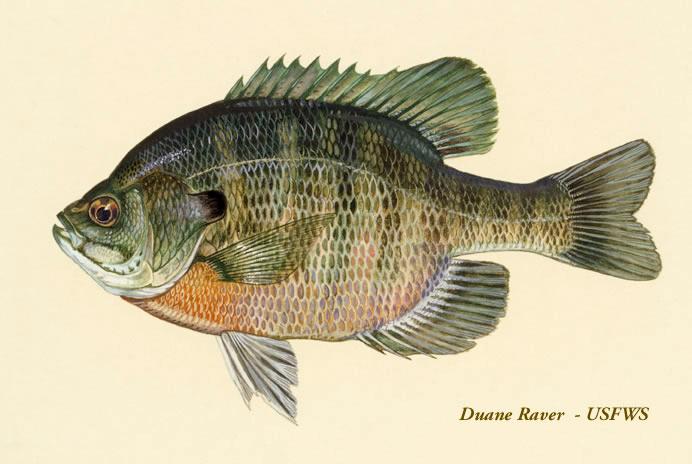
| Common Name | Bluegill |
|---|---|
| Scientific Name | Lepomis macrochirus |
| Baits & Lures | Nightcrawlers, wax worms, crickets, small jigs |
| Local Waters | Burrage Pond, Cleveland Pond, East Monponsett Pond, Furnace Pond, Robbins Pond, Sampsons Pond, Stetson Pond, West Monponsett Pond |
| Best Season | Late spring through summer; most visible during spawning (May–July) |
| Typical Local Size | 5–8 inches; occasional fish to 10 inches |
| Bag/Size Limit | No statewide bag or size limit — verify current regs |
Fishing Tips: A piece of nightcrawler under a bobber in 3 to 5 feet of water is as simple as it gets, and it works. During the spawn in late spring, males hold on shallow circular nests you can often spot in clear water and will hit almost anything near them. To tell bluegill from pumpkinseed: bluegill have a solid dark ear flap and faint vertical bars; pumpkinseed have an orange-tipped ear flap and bright cheek markings.
Pumpkinseed
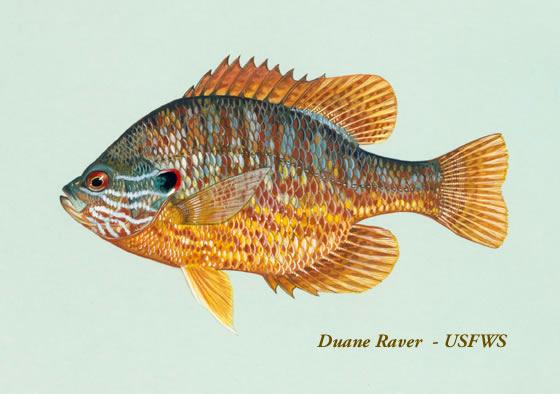
| Common Name | Pumpkinseed |
|---|---|
| Scientific Name | Lepomis gibbosus |
| Baits & Lures | Nightcrawlers, wax worms, crickets, small jigs |
| Local Waters | Burrage Pond, Cleveland Pond, East Monponsett Pond, Furnace Pond, Robbins Pond, Sampsons Pond, Stetson Pond, West Monponsett Pond |
| Best Season | Late spring through summer; most visible during spawning (May–July) |
| Typical Local Size | 4–7 inches; occasional fish to 9 inches |
| Bag/Size Limit | No statewide bag or size limit — verify current regs |
Fishing Tips: Same approach as bluegill: small worm on a hook under a bobber in shallow water. They share the same habitat and often come up together. Pumpkinseed tend to run a bit smaller, but they fight well for their size. Look for the orange-tipped ear flap and vivid orange-and-blue cheek markings. One of the better-looking fish you'll catch in these waters.
Brown Bullhead
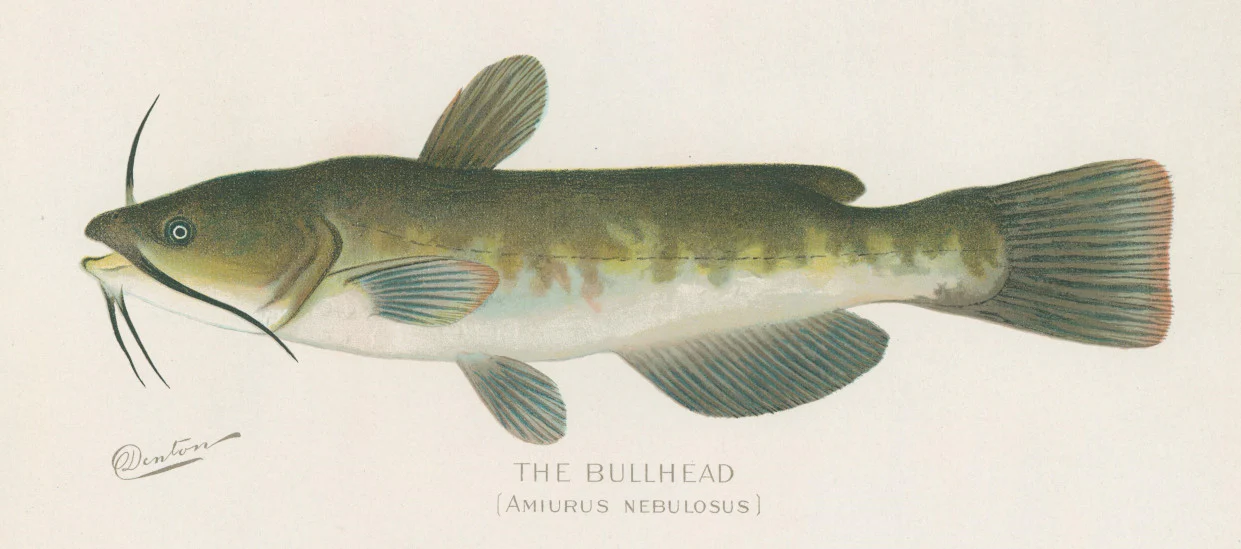
| Common Name | Brown Bullhead |
|---|---|
| Scientific Name | Ameiurus nebulosus |
| Baits & Lures | Nightcrawlers, chicken liver, cut bait |
| Local Waters | Burrage Pond, Cleveland Pond, East Monponsett Pond, Furnace Pond, Long Pond (Plymouth), Robbins Pond, Sampsons Pond, Silver Lake, Stetson Pond, West Monponsett Pond |
| Best Season | Late spring and summer; most active after dark |
| Typical Local Size | 9–13 inches |
| Bag/Size Limit | No statewide bag or size limit — verify current regs |
Fishing Tips: Bullhead find food by smell. Use nightcrawlers, chicken liver, or cut bait, and fish it right on the bottom. A slip-sinker rig works well: thread the line through the weight so a fish can pick up the bait without feeling resistance. Most bites come after dark. When you land one, grip from the top with your fingers behind the pectoral spines. Those spines are sharp.
Rainbow Trout
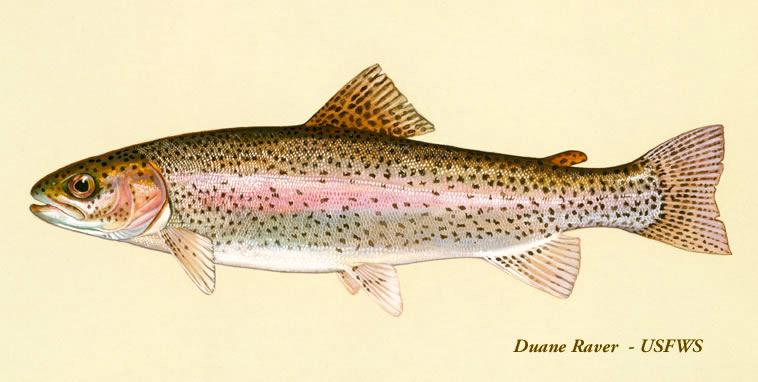
| Common Name | Rainbow Trout |
|---|---|
| Scientific Name | Oncorhynchus mykiss |
| Baits & Lures | PowerBait, nightcrawlers, inline spinners, small spoons |
| Local Waters | Long Pond (Plymouth) |
| Best Season | Spring through early summer (April–June); stocked late March through May by MA DFW |
| Typical Local Size | 10–14 inches (stocked fish); holdover fish can exceed 16 inches |
| Bag/Size Limit | 5 fish per day (combined trout limit), 9-inch minimum — verify current regs |
Fishing Tips: The standard setup is Berkley PowerBait on a small treble hook with a sliding sinker a foot or two up the line. Cast it out, let the sinker settle on the bottom, and the bait floats up. Spinners and nightcrawlers work too. Plan your trip for April or May. By late June the water is usually too warm. Check the MA DFW stocking report before making the drive.
Brook Trout
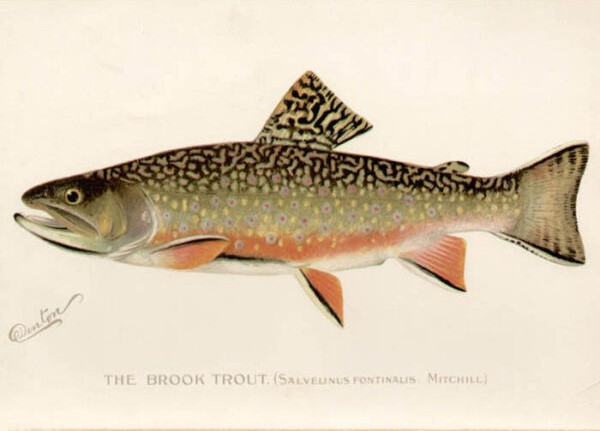
| Common Name | Brook Trout |
|---|---|
| Scientific Name | Salvelinus fontinalis |
| Baits & Lures | Small spinners, nightcrawlers, wet flies, small spoons |
| Local Waters | Long Pond (Plymouth) |
| Best Season | Spring through early summer (April–June); same stocking window as rainbow trout |
| Typical Local Size | 8–12 inches (stocked fish) |
| Bag/Size Limit | 5 fish per day (combined trout limit), 6-inch minimum — verify current regs |
Fishing Tips: Brook trout are stocked at the same time as rainbows and take the same baits. They're more sensitive to warm water, so April and early May are your best window. If you're not sure what you caught, look for the worm-like markings on the back, orange spots ringed in blue on the sides, and orange-tipped fins with a white leading edge. Hard to mistake once you've seen one.
You Might Also Encounter
These species are present in our local waters but are rarely targeted. Most are caught incidentally when fishing for something else.
American Eel — Anguilla rostrata
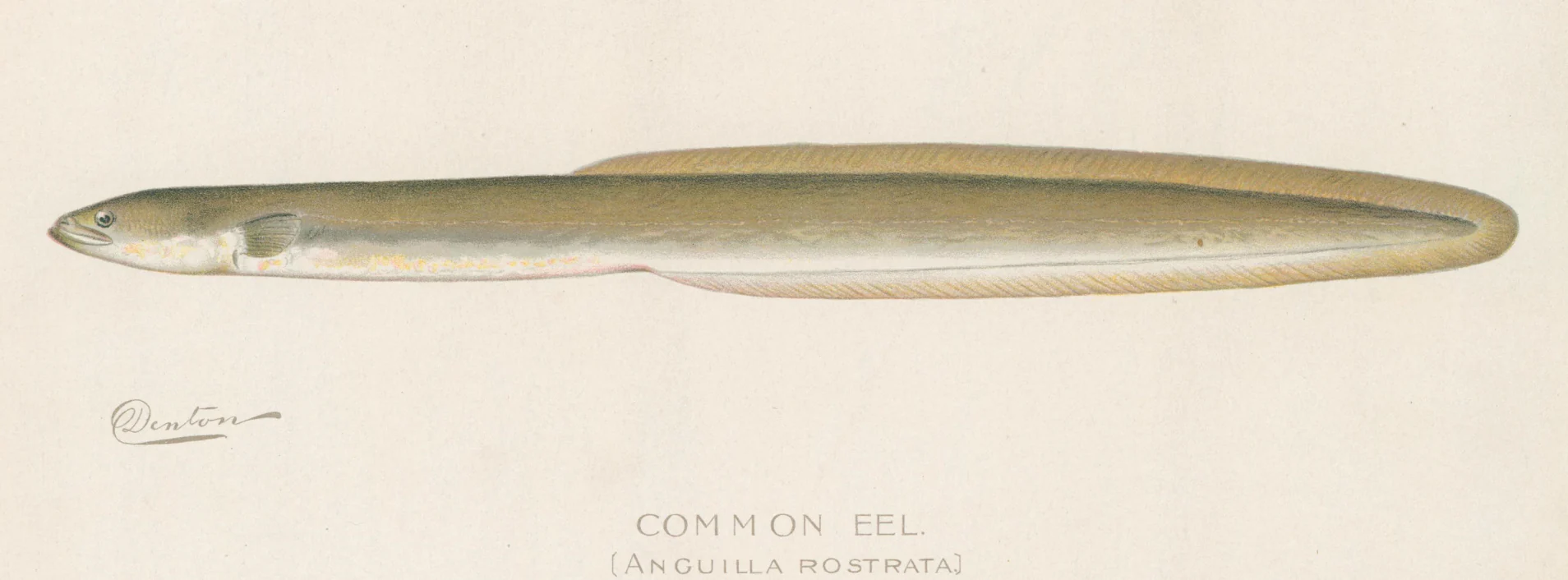
| Local Waters | East Monponsett Pond, Furnace Pond, Long Pond (Plymouth), Robbins Pond, Sampsons Pond, Silver Lake, Stetson Pond, West Monponsett Pond |
|---|
Fishing Tips: Eels are almost always caught by accident, usually on a nightcrawler fished on the bottom after dark. If you hook one, expect it to twist and wrap around the line. A damp cloth or glove helps with the grip. Unhook carefully and release. American eels are a species of concern across their range. Check current Massachusetts regulations before keeping any.
White Sucker — Catostomus commersonii
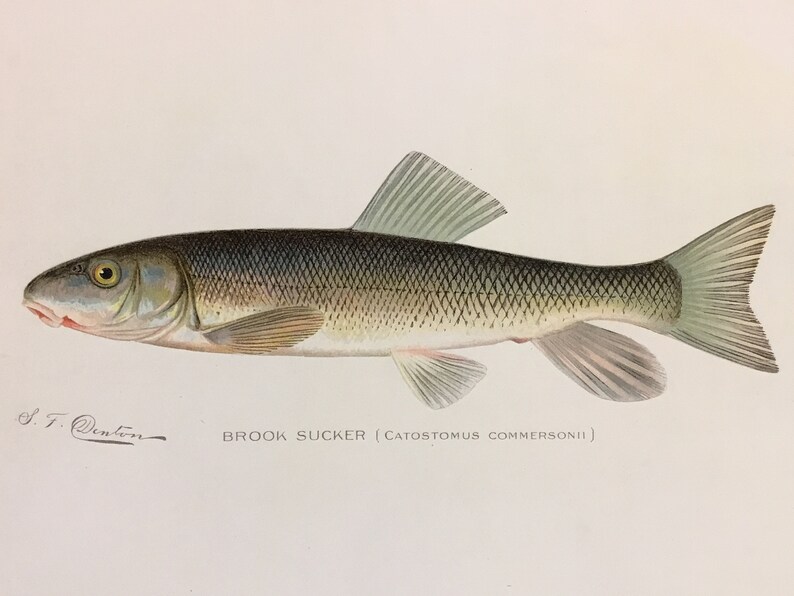
| Local Waters | Long Pond (Plymouth) |
|---|
Fishing Tips: Suckers are caught by accident on small hooks and worms near the bottom. They feed with a downward-pointing mouth and won't chase lures. Easy to identify when you catch one. No statewide bag or size limit, but most are released. In early spring, they run up small stream inlets to spawn in visible groups. Worth slowing down to watch if you're near a tributary.